Last updated July 15, 2026
Roof Repair Maintenance Checklist for Las Vegas Homeowners
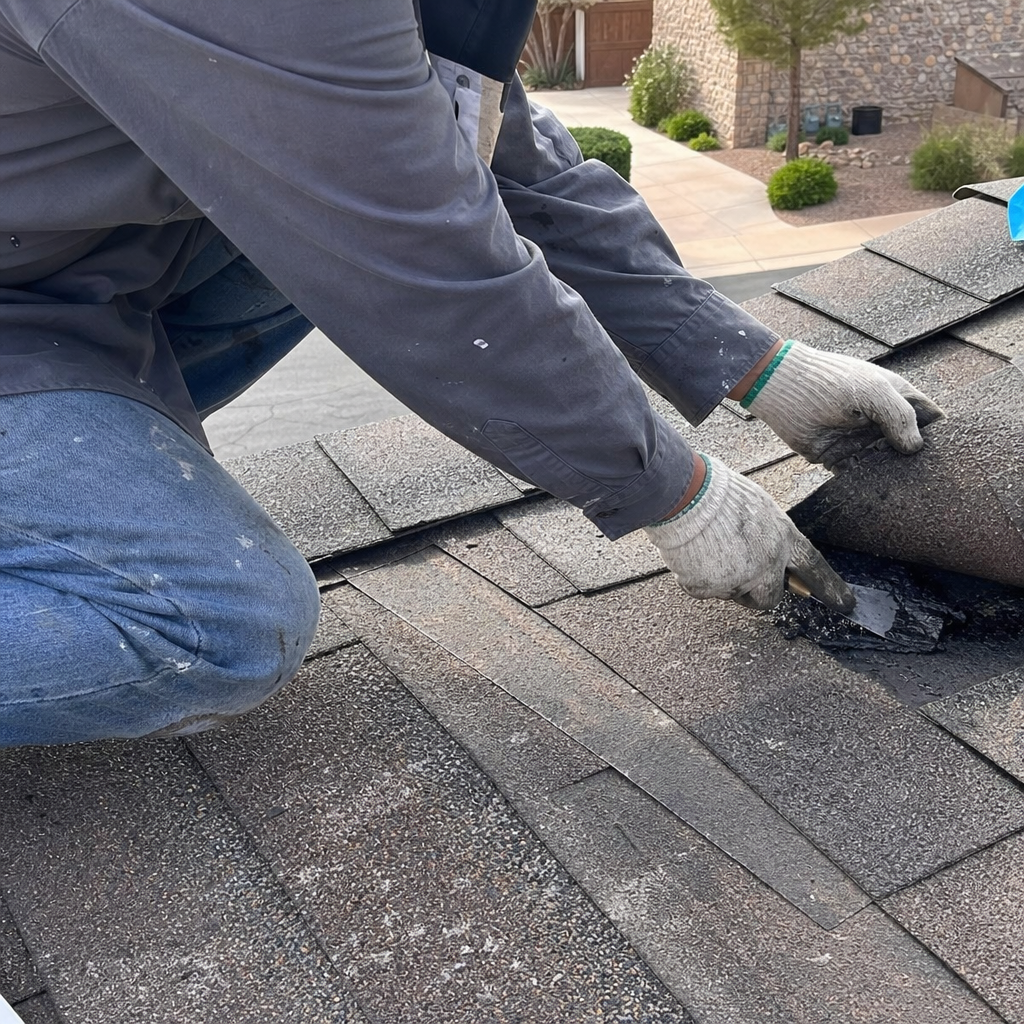
Here’s something most Las Vegas homeowners don’t expect to hear: the single most common repair Bob Phillips finds on first inspections isn’t storm damage from a monsoon — it’s cracked flashing sealant that dried out and split silently over a single desert summer. No dramatic event. No obvious moment. Just 115°F ambient heat baking the elasticity out of sealant while you’re running your AC inside. By the time a water stain appears on your ceiling, that crack has probably been open for six months. This guide exists to help you find those problems before they find your drywall — with a checklist built specifically around the two seasons that actually destroy Las Vegas roofs. For more on protecting your investment year-round, see our Seasonal Roofing Care for Las Vegas: Year-Round Homeowner’s Guide.
Quick Answer
A Las Vegas roof maintenance checklist should follow two critical windows: a pre-monsoon inspection in late May or early June, and a post-summer UV audit in October or November. Las Vegas roofs don’t wear out the same way roofs in other climates do — extreme UV exposure, thermal cycling that can swing 40°F between day and night, and a concentrated monsoon window between July and September are the primary threats. Checking five specific areas — flashing seals, valley flashing, penetration boots, membrane condition, and drainage — twice a year catches the vast majority of failures before they become interior leaks.
Table of Contents
- The Two Seasons That Destroy Las Vegas Roofs
- Pre-Monsoon Inspection Checklist (May–June)
- Post-Summer UV Audit (October–November)
- Flat Roof Ponding-Water Checks After Any Rain Event
- What Homeowners Can Do vs. What Voids Your Warranty
- Annual Cost-Tracking: When Repair ROI No Longer Beats Replacement
- Common Mistakes to Avoid
- When to Call a Professional
- Frequently Asked Questions
- The Bottom Line
The Two Seasons That Actually Destroy Las Vegas Roofs
Most roofing guides are written for four-season climates — freeze-thaw cycles, ice dams, spring rains, fall leaf buildup. None of that is your reality in Las Vegas. Your roof faces two distinct threat periods, and understanding them changes everything about when and how you maintain it.
Threat Season 1: The UV Grind (April–September). Las Vegas logs an average of 294 sunny days per year. That’s not a feature when you’re a roofing material. UV radiation breaks down asphalt binder, dries out sealants and pipe-boot rubber, and causes the thermal cycling — hot days, cool nights — that fatigues flashing metal and causes nails to work loose over time. In the Summerlin and Henderson areas, west- and south-facing roof slopes receive the most concentrated exposure and tend to age faster than north-facing sections on the same home.
Threat Season 2: The Monsoon Window (July–September). Las Vegas receives most of its annual rainfall in a compressed six-to-eight-week window. The National Weather Service classifies the Las Vegas monsoon season as June 15 through September 30. During this window, convective storms can dump an inch or more of rain in under an hour — directly onto a roof that may have sat bone-dry and baking for four months. Dry, contracted sealants that seemed adequate in May suddenly face hydrostatic pressure. Cracks that were cosmetic in June are water pathways in August.
Every item on this checklist maps to one of those two threat seasons. That structure is intentional.
Pre-Monsoon Inspection Checklist (May–June)
The goal of a pre-monsoon inspection is simple: find anything the summer UV season degraded before the first heavy rain arrives to exploit it. Conduct this inspection in late May or the first two weeks of June — before monsoon season officially opens on June 15. Here are the five specific areas to check.
- Valley Flashing. Roof valleys channel more water per square foot than any other section during a hard rain event. Inspect the metal valley flashing for lifting edges, rust staining, or sealant that has pulled away from the shingle edge. In older Las Vegas homes (pre-2005 construction in areas like North Las Vegas and the older Spring Valley corridor), open valleys with exposed metal are still common and are particularly vulnerable to sealant failure.
- Penetration Seals — All of Them. Every pipe, vent stack, HVAC curb, and conduit that passes through your roof deck is a potential water entry point. Check the sealant collar around each one. Rubber pipe boots on plumbing stacks crack in as little as five to seven years under Las Vegas UV conditions — significantly faster than the 10–15 year life you’d see in a Pacific Northwest climate. If the rubber is chalky, cracked, or pulling away from the pipe, it needs to be replaced before monsoon season.
- Chimney and Skylight Flashing Sealant. Step flashing and counter flashing at chimneys are the number-one source of the slow, insidious leaks Bob Phillips finds on first inspections. The sealant bead at the top of counter flashing should be continuous with no visible cracks. Press gently — if it’s lost its flex and feels rigid, it’s already past its useful life.
- Drip Edge and Fascia Condition. Check for drip edge that has lifted, bent, or separated from the fascia board. In Las Vegas neighborhoods with mature landscaping — areas like Anthem in Henderson or the older sections of Summerlin — wind events earlier in the spring sometimes lift drip edge without homeowners noticing.
- Gutters and Downspout Outlets. Clear any debris that accumulated over winter and ensure downspout outlets direct water at least three feet away from the foundation. A clogged gutter during a monsoon event can back water under the first course of shingles. This is also a good time to check for gutter sag or pull-away from the fascia — both are signs the hanger hardware is failing.
For each area, take a dated photograph with your phone. This photo log becomes your baseline — you’ll compare it at your October audit and it documents the roof’s condition for warranty or insurance purposes.
Post-Summer UV Audit (October–November)
Once the monsoon window closes and temperatures drop below 100°F consistently — typically by mid-October in Las Vegas — it’s time to assess what the UV season took from your roof. This audit focuses on material degradation rather than water vulnerability.
What to Look For on a Shingle Roof
- Granule loss. Asphalt shingles from manufacturers like Owens Corning, GAF, and CertainTeed are coated with ceramic granules that reflect UV and protect the asphalt binder beneath. When granules wash away, the binder is exposed directly to UV — and it degrades fast in the Las Vegas climate. Check your gutters for granule accumulation (it looks like coarse sand). A light dusting is normal on any roof. A quarter-inch or more of granule sediment in your gutters after a single season means accelerated wear.
- Shingle curling or cupping. Lift a corner on any shingle that looks raised at its edge. Thermal cycling causes asphalt shingles to cup upward at the edges or curl downward — both conditions allow wind to catch and lift them during monsoon-season gusts.
- Blistering. Small raised bubbles on the shingle surface indicate that volatile gases escaped the asphalt layer during heat. Minor blistering is cosmetic; blisters that have popped or are concentrated in one area may indicate inadequate attic ventilation — a common issue in Las Vegas homes where attic temperatures can exceed 160°F in summer.
- Fastener pop-up. Walk your attic in October and look for any roofing nails that have worked through the sheathing and are now visible or protruding. This is a direct result of thermal cycling expanding and contracting the roof deck repeatedly.
What to Look For on a Tile or Metal Roof
- Cracked or slipped tiles. Concrete and clay tile are popular in Las Vegas because of their thermal mass — they handle UV well but can crack from foot traffic or debris impact. Walk your roofline from the ground with binoculars and look for any tiles that are cracked, chipped, or have shifted out of alignment.
- Underlayment exposure. If a tile is missing entirely, the synthetic underlayment beneath it is directly exposed to UV. That underlayment can degrade within a single season of exposure — one missing tile can become a deck failure if it’s not addressed promptly.
Flat Roof Ponding-Water Checks After Any Rain Event
Las Vegas has a higher proportion of flat-roofed homes than most U.S. cities — a legacy of the desert modernist architecture that shaped the valley’s residential development from the 1950s onward. If your home or addition has a flat or low-slope roof, ponding water is your primary maintenance concern.
What is ponding water? Any water that remains on a flat roof surface more than 48 hours after a rain event is classified as ponding. It’s not just a surface nuisance. Standing water accelerates membrane degradation, adds structural dead load (water weighs 5.2 lbs per square foot per inch of depth), and can work into membrane seams and flashings under hydrostatic pressure.
How to Document Ponding Yourself
- Within 24 hours of any rain event, safely access your flat roof or photograph it from an upper-floor window if safe access isn’t available.
- Photograph any visible standing water with a timestamp. Note the approximate diameter and depth (you can estimate depth by placing a ruler or pencil vertically).
- Return 48 hours later and photograph the same area. If water remains, you have a drainage problem that needs to be addressed before the next event.
- Check your roof drains and scuppers — flat roofs drain through interior drains or through scuppers (openings in the parapet wall). Even a small debris blockage can turn a slight low spot into a significant pond.
- Log each event with the date, estimated water depth, and time it took to drain. After two or three monsoon-season events, this log will show whether the problem is worsening — a signal that re-sloping or drain relocation may be needed.
For Specialty Roofing in Las Vegas — including flat and low-slope membrane systems — this kind of documentation is also useful when scheduling a professional assessment, because it tells the contractor exactly where and how often the problem occurs.
What Homeowners Can Do vs. What Voids Your Warranty
This is an area where we see Las Vegas homeowners make expensive mistakes — not from negligence, but from not knowing where the line is between maintenance and warranty-voiding work.
Tasks Homeowners Can Safely Do
- Gutter cleaning and flushing. Removing debris from gutters and downspouts is homeowner maintenance that has no impact on roofing warranties.
- Ground-level and attic visual inspections. Photographing your roof from the ground or checking your attic for staining, nail pops, or daylight penetration carries no warranty risk.
- Clearing debris off the roof surface. Removing branches, leaves, or HVAC debris from the surface is safe, provided you do not walk on the roof in a way that damages shingles.
- Noting and documenting symptoms. Water stains on ceilings, granules in gutters, visible cracked sealant — cataloging these with photos is something any homeowner should do and is entirely within your scope.
Tasks That Can Void Manufacturer Warranties
- Applying over-the-counter sealants to shingles or flashing. Products like silicone caulk or plastic roof cement applied by a homeowner can void material warranties from manufacturers including GAF, CertainTeed, Owens Corning, IKO, Atlas, Tamko, and Boral — and can actually trap moisture rather than seal it out.
- Walking on a tile roof without proper technique. Tile roofs require specific foot placement to avoid cracking tiles. Homeowner traffic is a leading cause of cracked tile in Las Vegas — and cracked tiles caused by foot traffic are specifically excluded from manufacturer coverage.
- Replacing flashing without matching the original installation specification. Flashing that’s replaced with an incompatible metal gauge or installed without proper sealant overlap can create a warranty exclusion on the adjacent material.
- Any repair that penetrates the roof deck. Driving new fasteners, cutting into the deck, or installing any penetration requires a licensed contractor in Clark County to maintain both permit compliance and warranty validity.
If you’re unsure whether a task falls inside or outside homeowner scope, it costs nothing to call before you act. Our Roof Repair in Las Vegas service covers the full range of warranty-compliant repair work — from resealing a single penetration to correcting flashing failures across an entire slope.
Annual Cost-Tracking: When Repair ROI No Longer Beats Replacement
One of the most practical things a Las Vegas homeowner can do is keep a simple repair log. It doesn’t need to be complicated — a spreadsheet or even a notes app entry with the date, what was repaired, and what it cost is enough. Here’s why it matters.
Roofing contractors sometimes see homeowners who have spent $4,000 to $6,000 on piecemeal repairs over four years on a roof that should have been replaced at year one of that cycle. The repairs weren’t wrong — each one addressed a real problem — but in aggregate, they exceeded what our Roof Repair services would recommend, costing more than a replacement while leaving the homeowner still on an aging, problematic roof.
A Simple Decision Framework
| Situation | Likely Right Call |
|---|---|
| Roof is under 15 years old, isolated repair needed | Repair — strong ROI remaining |
| Repair cost is under 20% of replacement cost | Repair — math favors it |
| Two or more repairs in one 12-month period | Get a replacement assessment |
| Cumulative repairs exceed 30% of replacement cost | Replacement likely the better investment |
| Roof is 20+ years old with granule loss across multiple slopes | Plan replacement — not a matter of if, when |
In the Las Vegas market, a standard asphalt shingle roof replacement typically runs $8,000–$18,000 depending on square footage, pitch, and material tier. A premium tile or metal roof replacement runs higher. Keeping your repair log gives you the data to have an honest conversation with a contractor — and to recognize when the contractor recommending repair might be solving a symptom rather than the underlying problem. When the numbers point toward replacement, our Roof Replacement & Installation in Las Vegas page covers what that process looks like from first inspection through final installation.
Bob Phillips has been reading Las Vegas roofs for 25 years — including homes in Henderson, Summerlin, North Las Vegas, the Lakes, and Green Valley. A quarter-century of pattern recognition means he’ll give you a straight answer on whether your roof has years of repair life left or whether you’re throwing money at a losing position.
Common Mistakes to Avoid
- Skipping the pre-monsoon inspection because “it hasn’t rained in months.” The dry spell is exactly why the inspection matters — sealants and materials have been contracting and baking since April. The absence of rain doesn’t mean the absence of damage; it means the damage hasn’t been tested yet.
- Using hardware-store silicone caulk on flashing or penetrations. General-purpose silicone doesn’t bond correctly to roofing substrates in extreme heat, and it can peel away within a single summer in Las Vegas temperatures, leaving the gap it was meant to seal wider than before.
- Ignoring granule accumulation in gutters. Las Vegas homeowners often dismiss this as normal wear. It is — up to a point. Persistent, heavy granule loss in a roof under 15 years old may indicate a manufacturing defect or ventilation problem that has a warranty remedy. Ignoring it forfeits that remedy.
- Not checking attic ventilation as part of roof maintenance. Inadequate attic ventilation is one of the leading causes of premature shingle failure in Las Vegas. An attic that traps heat above 160°F accelerates the degradation of the shingle’s asphalt binder from below, while the sun attacks from above. It’s a two-front problem.
- Waiting until you see a ceiling stain to investigate. By the time water appears on your ceiling in Las Vegas, it has typically traveled through the deck, through insulation, and along a rafter or truss for some distance. The source is almost never directly above the stain. Early visual inspection catches the entry point before interior damage occurs.
- Hiring the first contractor who shows up after a monsoon event. Storm-chasing contractors are a documented problem in the Las Vegas valley after significant weather events. They offer fast estimates and quick starts — and often disappear before warranty work is needed. Working with an established local contractor with a verifiable review history protects you from that outcome.
- Treating flat and pitched roofs as identical in maintenance terms. Las Vegas has both, often on the same property. The failure modes are completely different. Flat roofs require ponding-water checks; pitched roofs require granule and flashing checks. Applying one checklist to both misses critical items for each.
When to Call a Professional
Some situations call for professional eyes immediately, regardless of where you are in your maintenance calendar:
- Any active leak or ceiling staining — don’t wait for your scheduled inspection window.
- Visible daylight through the attic deck boards or sheathing.
- A monsoon event that was followed by interior water intrusion anywhere in the home.
- Sagging or soft spots in the roof deck when you walk it (this indicates structural damage, not just surface wear).
- Missing tiles, shingles, or flashing sections after a high-wind event.
- Any roof that’s within two years of the end of its estimated material life — a professional assessment before failure is far cheaper than an emergency call after.
Las Vegas Shield Roofing Experts offers free estimates across the Las Vegas valley — from a quick repair assessment to a full replacement consultation. Bob Phillips handles these personally; you’re not getting a salesman’s read on your roof, you’re getting 25 years of hands-on experience. Call (844) 352-8093 to schedule yours.
Frequently Asked Questions
How often should Las Vegas homeowners inspect their roof?
Twice a year is the right cadence for Las Vegas roofs — once in late May or early June before monsoon season, and once in October or November after summer UV stress peaks. These two windows catch the specific failure modes most common in the Las Vegas climate: pre-monsoon sealant and flashing vulnerability, and post-summer UV degradation. If you experience a significant monsoon event with heavy rain, a visual ground-level check and flat-roof ponding assessment should also happen within 48 hours of that event.
How much does roof repair cost in Las Vegas?
Most residential roof repairs in Las Vegas fall between $300 and $1,500 for common issues like flashing reseals, pipe boot replacement, and minor shingle repair. More involved repairs — valley flashing replacement, extensive sealant failure across multiple penetrations, or deck damage from ponding water — typically run $1,500 to $4,500 depending on scope and access. A free estimate from a licensed contractor is the only accurate way to price your specific situation. Call (844) 352-8093 for an exact quote — estimates are free and there’s no obligation.
What is the lifespan of a roof in the Las Vegas climate?
Las Vegas’s extreme UV index and thermal cycling measurably shorten shingle roof lifespan compared to manufacturer estimates based on national average conditions. A 30-year architectural shingle from manufacturers like GAF, CertainTeed, or Owens Corning realistically delivers 20–25 years of reliable service in Las Vegas without exceptional maintenance. With a consistent twice-yearly maintenance schedule, you can push toward the upper end of that range. Concrete and clay tile systems, and metal roofing, perform significantly longer in the Las Vegas climate — often 40–50 years — making them worth the higher upfront investment for homeowners planning to stay long-term.
Can I walk on my roof to do inspections in Las Vegas?
You can walk a pitched asphalt shingle roof carefully, but it’s not recommended without proper rubber-soled footwear and an understanding of where to step. On tile roofs, walking without knowing foot placement can crack tiles — and cracked tiles from foot traffic are typically excluded from manufacturer warranties. For most homeowners, a ground-level inspection with binoculars plus an attic walkthrough captures 80% of what a professional visual inspection finds, without the risk of creating new damage or warranty issues.
Does a Las Vegas homeowner need a permit for roof repairs?
In Clark County, which governs most of the Las Vegas valley, a permit is generally required for roof replacements and structural repairs. Minor maintenance — resealing penetrations, replacing a small number of shingles, cleaning gutters — typically doesn’t require a permit. However, any work that penetrates the roof deck, modifies drainage, or replaces structural components should be performed by a licensed contractor who pulls the appropriate permits. Working without required permits can affect your homeowner’s insurance coverage and your ability to sell the home. For details, read Roofing Permits, Codes & Inspections in NV: What You Need to Know. When in doubt, ask your contractor before work begins.
How do I know if my Las Vegas flat roof has a drainage problem?
The 48-hour rule is your diagnostic tool: photograph any standing water within 24 hours of a rain event and check back at the 48-hour mark. Water still present after 48 hours is classified as ponding and represents an active problem. Check your roof drains and scuppers first — even a small debris blockage causes ponding on an otherwise properly sloped roof. If your drains are clear and water still ponds, the roof surface may have developed low spots from membrane compression or structural deflection. That’s a condition that worsens each season and needs professional assessment before the next monsoon window opens.
The Bottom Line
A Las Vegas roof doesn’t fail on a predictable four-season schedule — it fails in the narrow gap between a summer that baked its sealants brittle and a monsoon event that exploits every crack the UV season left behind. The checklist in this guide is built around that specific reality. Two inspections per year — June and October — focused on the five high-failure areas: valley flashing, penetration seals, chimney and skylight flashing, drip edge, and drainage. Flat roof owners add a ponding-water log after every rain event. Keep a simple repair cost log so you can make a clear-eyed repair-versus-replace decision before a contractor has to make it for you. Explore more guides & resources to stay informed. And know the line between homeowner maintenance and warranty-voiding work — it’s a line that costs nothing to stay on the right side of.
442 Las Vegas homeowners have trusted Shield Roofing with a 4.9-star average — not because we say the right things, but because Bob Phillips is personally on the roof, every job, with 25 years of Las Vegas-specific experience behind every call he makes. Visit the Las Vegas Shield Roofing Experts home to learn more about what we do, or call (844) 352-8093 to schedule your free estimate today.
Written by Bob Phillips, Owner & Lead Technician at Las Vegas Shield Roofing Experts, serving Las Vegas since 2001.