Emergency & Storm Damage in Las Vegas, NV
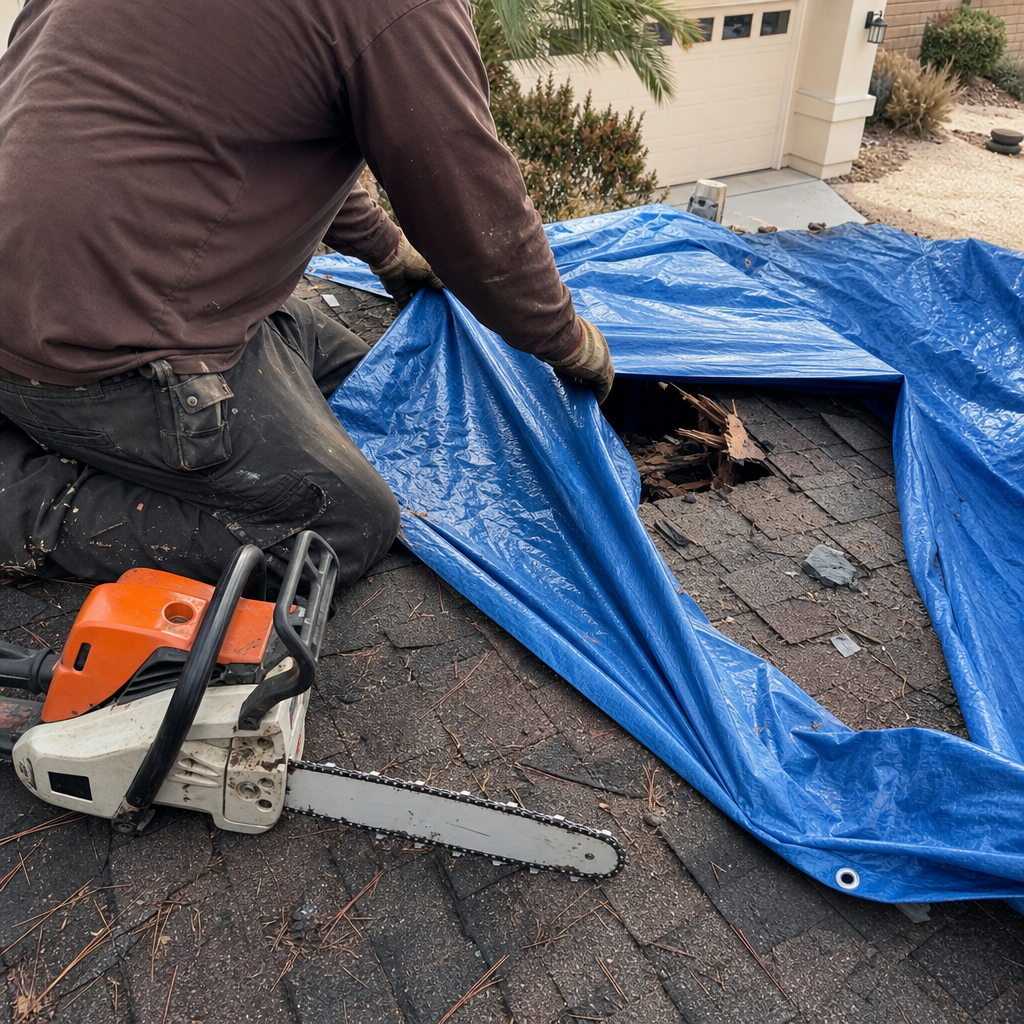
When a monsoon cell drops an inch of rain on your Las Vegas roof in under an hour, you need a crew on-site fast — not a voicemail. Our Emergency & Storm Damage team covers every neighborhood in the Las Vegas Valley, typically responding within hours of your call. Bob Phillips has been working Las Vegas roofs for 25 years, which means he knows what a Summerlin concrete-tile home looks like from the street versus what it looks like when the underlayment has already quietly failed beneath perfectly intact tiles. Call (844) 352-8093 now — estimates are free.
Why Las Vegas Shield Roofing Experts Is Las Vegas’s Preferred Emergency & Storm Damage Company
442 Las Vegas homeowners have reviewed us at an average of 4.9 stars. We don’t coast on that number — we earn it each job, including the ones that start at midnight after a monsoon rolls through the valley. Our Las Vegas customer base stretches from Summerlin to Anthem to the northwest valley, and the reviews reflect work across all of it, not just a single neighborhood pocket.
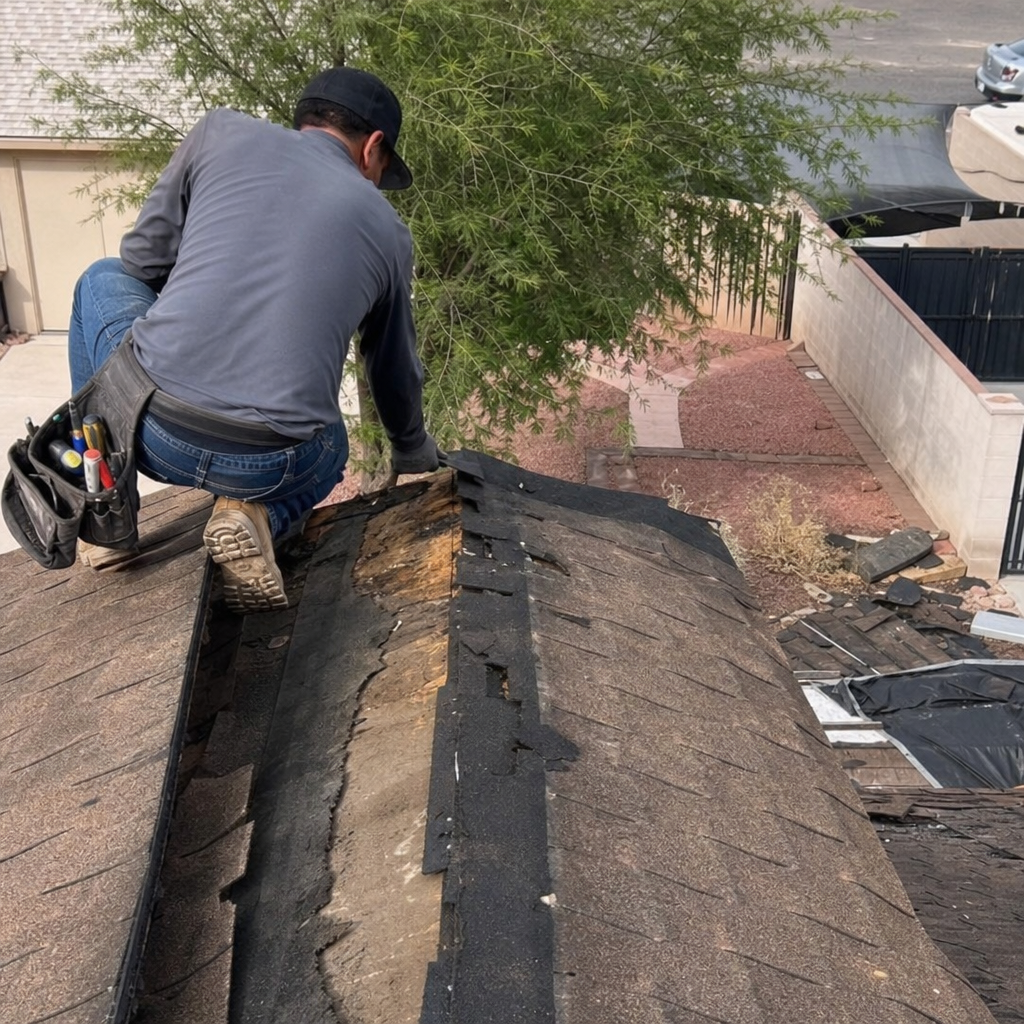
Bob Phillips isn’t a salesman who hands off to a crew after the contract is signed. He’s the Lead Technician — personally on the roof, personally documenting damage, personally accountable for the finished work. After 25 years on Las Vegas rooftops, Bob has developed pattern recognition for the specific failure modes this city’s housing stock produces. That institutional knowledge is the difference between a contractor who patches visible damage and one who finds what the storm actually broke.
Response time matters in an emergency. When your ceiling is dripping, every hour of delay means more saturated decking, more damaged insulation, and a harder insurance conversation. We stage crews specifically for Las Vegas storm response during monsoon season — July through September — because we’ve learned from 25 years of valley weather exactly when the phone starts ringing.
Our Emergency & Storm Damage Services in Las Vegas
Storm Damage Repair
Las Vegas storm damage is deceptive. The concrete tile that dominates the valley’s 1993–2008 housing stock is extraordinarily durable on the surface, which is exactly the problem. After a monsoon event, a roof at an address on West Charleston or in a Green Valley master-planned community can show zero visible cracking while actively leaking through heat-degraded underlayment beneath the field tile. Our storm damage repair process starts with a full diagnostic — not just a surface scan — so we repair what’s actually failing, not just what’s visible from the driveway. We work across all seven brands we service: GAF, CertainTeed, Owens Corning, IKO, Atlas, Tamko, and Boral.
Emergency Tarp
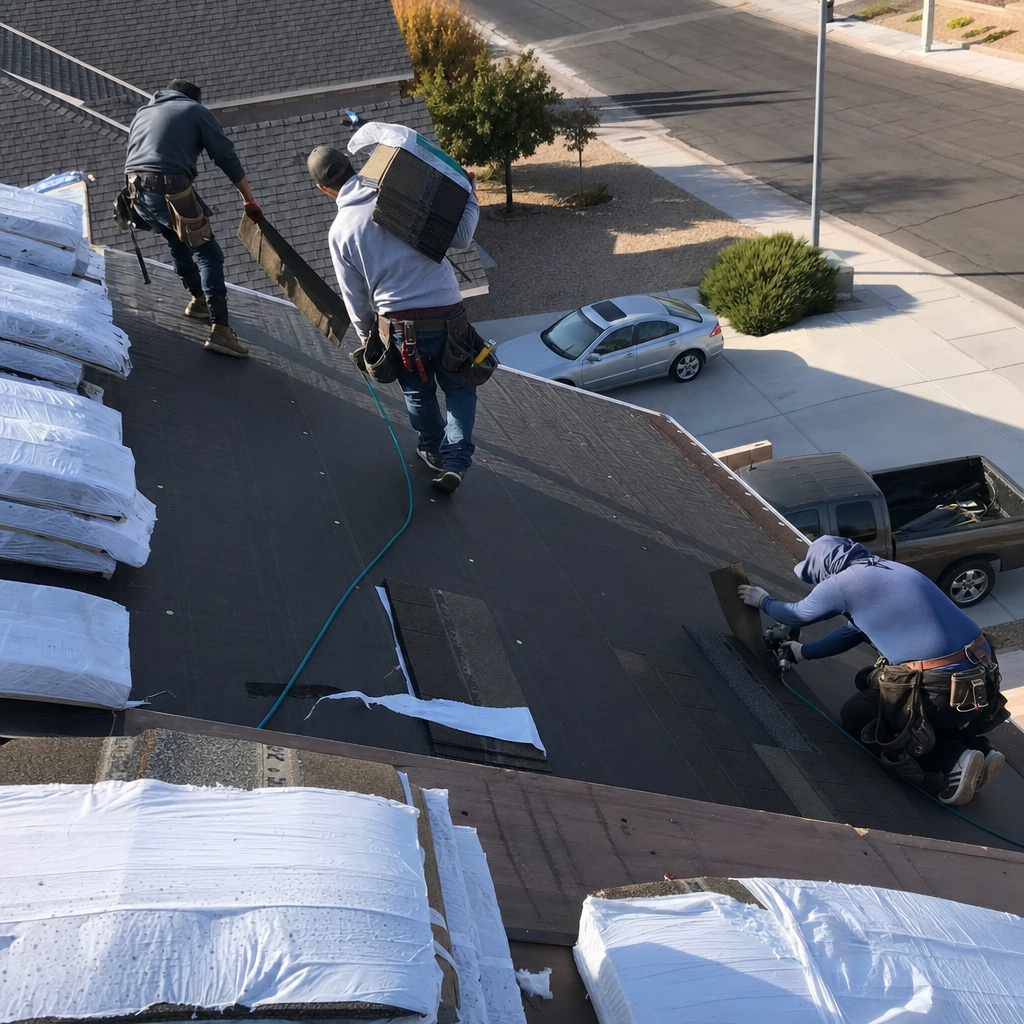
An emergency tarp is a bridge, not a fix — and the quality of that bridge determines how much additional damage you’re fighting when the insurance adjuster arrives. We install commercial-grade tarps secured at the fascia and ridge, not flapping plastic held down by loose tiles. In Las Vegas, where a July storm can be followed by a second cell 48 hours later, a properly installed tarp is the difference between a contained claim and a gutted master bedroom. We document the roof condition with timestamped photos before and after tarping — evidence that matters at the claim stage.
Insurance Claims
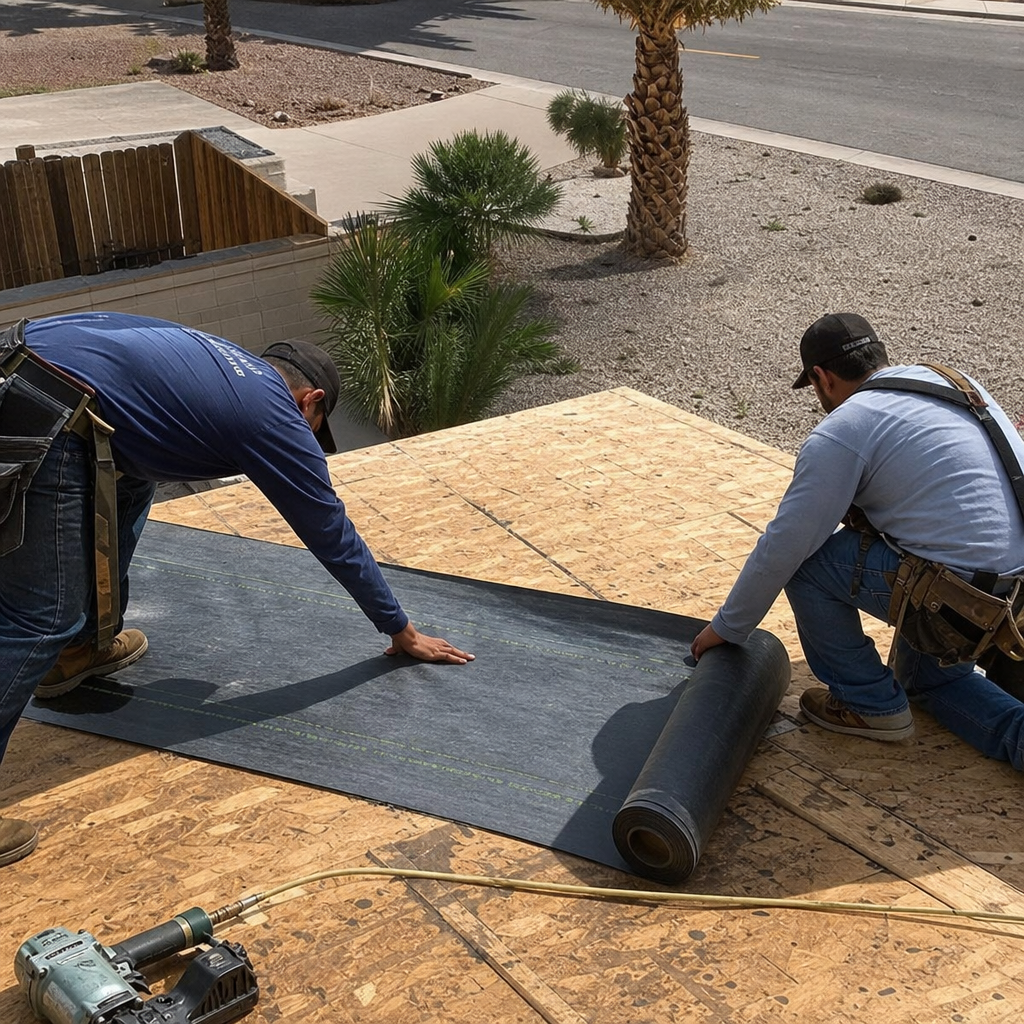
Filing a storm-damage claim on a Las Vegas concrete-tile home is more complicated than it looks, especially when the visible damage is minimal but the underlayment is gone. We’ve walked hundreds of Las Vegas homeowners through the documentation process — photos, moisture readings, material specifications — and we know what Nevada insurance adjusters look for on a claim for a 20-year-old tract home. Bob Phillips reviews every claim package personally before submission. The difference between a surface-patch settlement and a full underlayment replacement often comes down to the quality of that initial documentation, and we build the file to support the larger scope.
Wind Damage
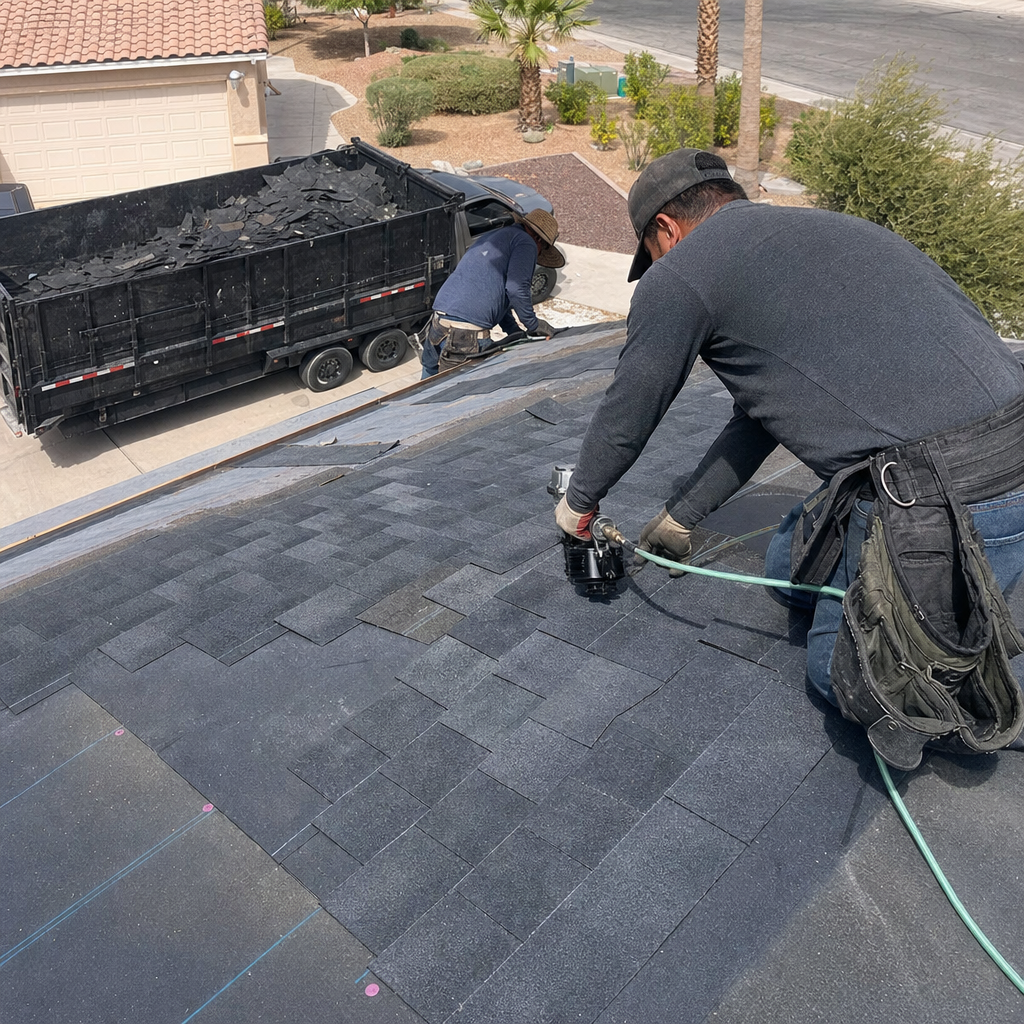
Las Vegas wind events don’t always make the news, but the valley’s geography funnels strong gusts through specific corridors — Spring Valley, the I-215 corridor near Summerlin, and the northwest valley near the 95 all see localized wind events that can lift tile and ridge caps without producing the kind of widespread storm coverage that prompts homeowners to inspect. We assess wind damage systematically, checking ridge caps, hip tiles, valley flashing, and any penetrations where wind-lifted material creates an opening. Displaced concrete tiles on a 4:12 pitch are not always obvious from the ground; they are always obvious to water.
What happens when you call
- 1
A real person answersNo phone trees — you reach a local pro.
- 2
You get an upfront price rangeHonest numbers before anyone is dispatched.
- 3
A background-checked tech heads outLicensed & insured, dispatched right away.
- 4
You approve before work beginsNothing starts until you say go.
Trusted Brands We Service in Las Vegas
Las Vegas Shield Roofing works across seven of the industry’s most established brands: GAF, CertainTeed, Owens Corning, IKO, Atlas, Tamko, and Boral. That range matters specifically in Las Vegas, where the dominant Boral and other concrete-tile profiles installed across valley subdivisions between 1993 and 2008 vary by phase, builder, and HOA specification. We maintain relationships with regional suppliers and document existing tile profiles before any repair job, because sourcing discontinued material in this market takes time — and knowing that in advance is what separates a crew that shows up prepared from one that leaves you tarped for three weeks waiting on a sample approval.
Common Emergency & Storm Damage Problems We See in Las Vegas Homes
- Underlayment failure hidden beneath intact tile. Mojave UV exposure and sustained roof deck temperatures of 160–170°F degrade felt underlayment years — sometimes a full decade — before the concrete tile above it shows any exterior symptom. A monsoon cloudburst then breaches a roof that would pass any casual visual inspection from the street or a ladder edge.
- Discontinued tile profiles blocking timely repairs. A significant share of the concrete tile installed across Summerlin and Henderson phases between 1997 and 2004 has since been discontinued by the original manufacturer. A contractor responding to storm damage may be unable to source a matching tile for weeks, and Las Vegas HOA architectural review boards will reject a re-roof using a visually similar but technically different profile — meaning the home stays tarped while a sample waits for board approval.
- Valley and penetration flooding on shallow-pitch roofs. The 3:12 to 5:12 pitches standard to Las Vegas tract homes were designed around the valley’s historical rainfall pattern: under four inches annually, delivered in low-intensity events. The violent monsoon cloudbursts that now deliver an inch per hour overwhelm drainage at valleys and around pipe penetrations, forcing water under tile and through any degraded flashing before it can exit the roof plane.
- Secondary damage from delayed tarp installation. In Las Vegas’s dry climate, homeowners sometimes underestimate interior damage risk after a storm because the weather turns dry within 24 hours. But a saturated OSB deck in a sealed attic above a stucco-and-drywall ceiling holds moisture for days, and mold colonization in the valley’s summer heat can begin within 48–72 hours of the initial intrusion. Getting a proper tarp on quickly is not optional.
The Las Vegas Underlayment Crisis Hiding in Plain Sight
This is the local condition that separates emergency storm response in Las Vegas from virtually anywhere else in the Southwest — and it’s worth explaining clearly because it directly affects your risk right now. The residential construction boom that ran through this valley from roughly 1993 to 2008 produced tens of thousands of nearly identical concrete-tile homes across Summerlin, Henderson, Anthem, and the northwest valley, almost all of them built on 3:12 to 5:12 pitches with 30-lb felt underlayment. That underlayment carries a rated service life, but those ratings were developed in test climates nowhere near as severe as the Mojave. Sustained roof deck temperatures of 160–170°F — routine in Las Vegas from May through September — accelerate felt degradation to the point where the underlayment on a 2001-era home may already be at or past functional failure while the concrete tile above it looks pristine from the street.
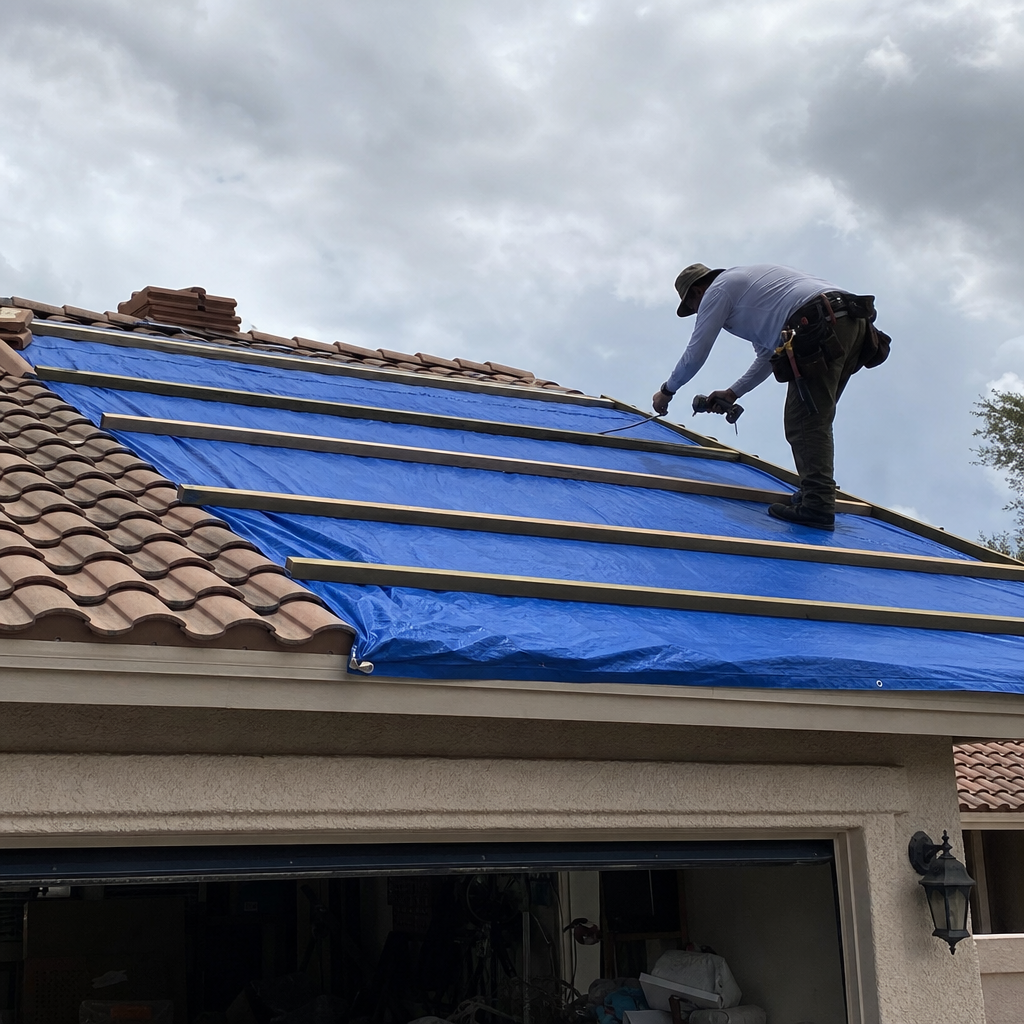
Those homes are now simultaneously entering their 20–25-year window. All of them. At city scale. Which means that the next significant monsoon event doesn’t need to be historic to breach thousands of roofs — it just needs to be the storm that arrives after the underlayment finally gives up. We responded to exactly this scenario after a July monsoon cell tracked across Anthem and dropped over an inch of rain in 45 minutes. The Boral concrete tile on a 2001-era home showed zero visible cracking from the street. Once we tarped the affected section and lifted the field tiles, we found the original 30-lb felt underlayment had delaminated across nearly 400 square feet of the 4:12 pitch. The saturated deck was actively dripping into the primary bedroom. We documented every layer with timestamped photos before filing the homeowner’s insurance claim — and secured coverage for full underlayment replacement rather than a surface-only patch. That outcome does not happen without documentation, and documentation does not happen without a crew that knows what to look for.
Pricing for Emergency & Storm Damage in Las Vegas, NV
Emergency storm response in Las Vegas runs across a meaningful cost range depending on scope and timing. Here are honest figures for this market:
- Emergency tarp installation: $350–$650 for most single-story Las Vegas tract homes; larger or multi-story homes run $650–$1,100.
- Storm damage inspection and assessment: Free when you call (844) 352-8093 — we document everything at no charge.
- Underlayment replacement (partial section): $1,800–$4,500 depending on square footage and pitch access; full-roof underlayment replacements on a standard Las Vegas valley home typically run $6,000–$12,000.
- Wind damage tile repair: $400–$1,200 for localized repairs; scope expands significantly if discontinued tile requires sourcing or HOA sample approval delays the timeline.
- Full storm-damage restoration (insurance claim scope): $8,000–$22,000 for a complete concrete-tile re-roof on a typical 2,000–3,000 sq ft Las Vegas home, dependent on material selection across our seven available brands.
Insurance claims can offset the majority of storm-related costs — but only when the claim is filed with complete, professional documentation from day one. Call (844) 352-8093 for a free on-site assessment and we’ll tell you exactly where your roof stands before you file anything.
We Also Serve Cities Near Las Vegas
Our storm response coverage extends well beyond the city limits. We regularly serve homeowners in Winchester, Paradise, North Las Vegas, and Sunrise Manor — all of them carrying the same 1990s and 2000s concrete-tile housing stock, the same underlayment risk, and the same HOA constraints that make emergency storm work in the Las Vegas Valley its own discipline. One call reaches all of it: (844) 352-8093.
Serving Las Vegas, NV — Our Local Coverage Area
We’re based in the Las Vegas area and know this community well. Use the map below to see our service coverage — if you’re nearby, we can almost certainly help.
FAQs — Emergency & Storm Damage in Las Vegas
The tile is almost certainly intact — the underlayment beneath it has failed. Las Vegas’s sustained roof deck temperatures of 160–170°F degrade 30-lb felt underlayment years before the concrete tile above it shows any exterior symptom. The tile sheds water under normal rainfall, but a monsoon event that delivers an inch per hour overwhelms whatever integrity remains in the degraded felt, and water pushes through to the deck. This failure mode is widespread across the valley’s 1993–2008 housing stock right now — a roof can look perfect from the street and be actively leaking inside. Don’t wait for a second storm to confirm it. Call (844) 352-8093 and we’ll assess the actual condition of your underlayment the same day.
Not without pre-approval — and in many Las Vegas HOA communities, the answer is a hard no even for a close visual match. Architectural review boards in Summerlin, Henderson, and Anthem communities require exact profile and color matches, and many of the concrete tile profiles installed across valley subdivisions between 1997 and 2004 have since been discontinued. We start every storm repair job by pulling the existing tile specification and checking current availability before we schedule anything, and when a match can’t be sourced, we submit the documentation and material samples to the HOA board as part of our pre-work process. This takes time, which is exactly why getting a proper emergency tarp in place immediately matters so much.
For Henderson and the broader Las Vegas Valley, we typically respond within two to four hours of your call during active monsoon season. Bob Phillips stages crews for rapid deployment during July through September specifically because of how quickly valley storm systems move and how fast secondary interior damage can develop in Las Vegas’s summer heat. Call (844) 352-8093 as soon as the rain stops — the window between the storm and the next UV cycle is the right time to tarp.
Your insurer will want timestamped photographs of the damage taken before any repair work begins, a written scope of damage from a licensed roofing contractor, and documentation of the storm event itself (date, time, weather service records). For Las Vegas concrete-tile homes where the damage is in the underlayment rather than the tile surface, the documentation package needs to include photos of the lifted field tile and the exposed underlayment condition — otherwise the adjuster will settle for a surface-only patch. We prepare a complete claim package on every emergency job: photos, moisture documentation, material specifications, and a written scope that reflects actual damage rather than visible damage. Call (844) 352-8093 and we’ll walk you through the full process before you file.
Las Vegas does receive hail — typically smaller-diameter hail during late-spring and early-summer storm cells, with occasional larger events during monsoon season. Concrete tile handles hail better than asphalt shingle, but significant hail events can crack tile at the nose or along the leading edge in ways that aren’t visible from the ground. More importantly, any impact that chips or cracks tile eliminates the weatherproofing function of that tile and exposes the already-stressed underlayment beneath it. If you experienced a hail event and there’s any question about impact, an inspection is worth the call — and if the damage documents cleanly, a claim is almost always worth filing. Call (844) 352-8093 for a free inspection and honest assessment before you decide.
Reviewed by Bob Phillips, Owner & Lead Technician at Las Vegas Shield Roofing Experts, serving Las Vegas, NV for 25 years.